
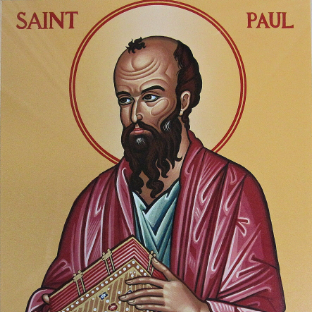
Few people have shaped the history of Christianity as profoundly as Saint Paul the Apostle. His story is one of the most extraordinary transformations in Christian history. Before becoming one of Christianity’s greatest missionaries, Paul was known as Saul, a zealous Jewish man who regarded the early Christian movement as a dangerous threat. By his own testimony, he persecuted the Church. The Acts of the Apostles describes him as present at the killing of Stephen, one of the first Christian martyrs, and later as someone who actively sought out followers of Jesus.
Then everything changed. On the road to Damascus, Paul encountered the risen Jesus Christ. The persecutor became a preacher, and the man who had tried to destroy the movement became one of its most energetic defenders. He spent the rest of his life proclaiming Jesus to Jews and Gentiles throughout the Mediterranean world. The Catholic Church honors him as the Apostle to the Gentiles, and Pope Benedict XVI emphasized that his encounter with the risen Christ was both a revelation and a calling to apostolic mission.
His influence is enormous. Thirteen New Testament letters bear his name, though scholars debate the authorship of some. Romans, 1 and 2 Corinthians, Galatians, Philippians, 1 Thessalonians, and Philemon are widely regarded as genuinely Pauline. His writings have shaped Christian thought on grace, faith, salvation, the Church, the Holy Spirit, freedom, marriage, resurrection, suffering, spiritual gifts, and life in Christ. His journeys helped establish Christian communities across Asia Minor, Macedonia, Greece, and eventually Rome.
His story is also deeply human. He experienced rejection, imprisonment, beatings, and shipwreck. He faced controversy and disagreed with other Christian leaders. He carried enormous responsibility and knew what it meant to suffer for his convictions, and he kept going. His life speaks not only to theologians and historians but to ordinary Christians who wonder whether their past disqualifies them from God’s purpose. Paul’s answer is powerful: grace can transform a persecutor into a preacher, an enemy into an apostle, and a broken past into a testimony.
Historical Background and Early Life
Saul of Tarsus
Paul’s original Jewish name was Saul. In his letters he identifies himself as a Jew and describes his background in some detail, and Acts connects him with Tarsus, a major city in Cilicia. Tarsus was an important urban center of the eastern Mediterranean, so Paul did not grow up in an isolated village. He belonged to a Jewish diaspora community within a wider Greco-Roman culture. Pope Benedict XVI notes that Tarsus lay between Anatolia and Syria, placing him in a culturally interconnected region. This background proved crucial: Paul knew the world of Judaism deeply, but he also knew the wider Mediterranean world into which Christianity would expand.
A Roman Citizen
Acts also presents Paul as a Roman citizen, a status that carried legal privileges ordinary inhabitants did not have. He used it during his arrests and trials, appealing to his legal standing when Roman authorities proposed certain punishments. This does not mean he lived as a privileged aristocrat. It shows that his identity crossed several cultural and legal boundaries: Jewish by religion and ethnicity, connected to the Greek-speaking Mediterranean, and, according to Acts, a Roman citizen. That combination helped prepare him for his missionary role.
Jewish Education
Paul describes himself as a deeply committed Jew educated in the Pharisaic tradition, and he speaks of training in Jerusalem. Acts associates him with the famous teacher Gamaliel. He knew the Hebrew Scriptures and Jewish traditions intimately, so his Christian theology did not arise from ignorance of Judaism. Quite the opposite: he interpreted Jesus through the Scriptures and theological categories he had inherited. His understanding of Abraham, Moses, the law, covenant, sin, righteousness, Messiah, and resurrection all grew from this Jewish foundation, which is why his letters are so full of references to Israel’s Scriptures.
The Tentmaker
Paul also had a practical trade. Acts identifies him as a tentmaker or worker in a related craft. He often stressed that he worked to support himself rather than burden the communities he served. The combination of intellectual training and manual labor is revealing. He was not simply an academic theologian. He worked with his hands, traveled, preached, reasoned, wrote, debated, and endured hardship.
Spiritual Awakening and Path to Sainthood
A Zealous Persecutor
To grasp Paul’s transformation, we must first understand who he was before. He does not hide this part of his story. In his letters he openly admits that he persecuted the Church. He did not rewrite his past to look spiritually impressive. According to Acts, he was involved in persecuting Christians in Jerusalem and sought authorization to pursue followers of Jesus beyond the city.
Why? Paul believed he was defending the truth. The claim that Jesus was the Messiah, and above all that the crucified Jesus had been raised from the dead, was hard to accept within his understanding of Jewish faith. He believed he was protecting God’s covenant. Pope Benedict XVI describes his attitude before Damascus as one of intolerance and persecution, which makes his eventual transformation all the more dramatic. He did not drift casually from one opinion to another. He experienced what he understood as a divine interruption.
The Road to Damascus
The story of his conversion is among the most famous in Christianity. Paul was traveling toward Damascus intending to deal with followers of Jesus when he encountered the risen Christ. Acts describes a brilliant light. Paul fell to the ground and heard a voice asking why he was persecuting Jesus. The encounter left him temporarily blind, and his confused companions led him into Damascus.
There a Christian disciple named Ananias was instructed to find him. Ananias hesitated, understandably. He knew Saul’s reputation and knew he had come to persecute believers. Yet God told him to go, and he obeyed. Paul regained his sight, was baptized, and began a new life.
Was It Really a “Conversion”?
There is an interesting theological detail here. Paul’s own letters do not usually describe Damascus as a “conversion” in the modern sense. He remained Jewish, and in his own understanding the encounter was not a rejection of the God of Israel. He came to believe that the God of Israel had fulfilled his promises through Jesus the Messiah. For Paul the event was at once revelation, vocation, and transformation. Pope Benedict XVI notes that his letters emphasize revelation and apostolic calling rather than narrating the event in the detail found in Acts. Paul speaks of Christ being revealed to him and of being called to proclaim the Gospel among the Gentiles.
The Meaning of Grace
The deeper Christian meaning of the event is grace. Paul later wrote, “By the grace of God I am what I am.” His apostleship was not something he had earned. He had been persecuting Christians, and Christ called him anyway. Pope Francis has likewise stressed that his vocation rested not on personal merit but on God’s goodness. Grace can reach people in unexpected places.
A Lifelong Process
The transformation did not happen in a single instant. Damascus was the beginning. Paul had to reconnect with the Christian community, establish credibility among people who understandably feared him, understand how the Gospel related to Jewish Scripture, discern his missionary calling, learn to lead communities, endure suffering, and handle criticism. Grace gave him a new direction, but discipleship still required years of growth. His early years after Damascus are hard to reconstruct in exact chronological detail, since his letters and Acts must be read together carefully rather than forced into a simple timeline. What is clear is that he moved from persecution to proclamation and became one of the movement’s most significant missionaries.
Ananias and the Power of Community
Ananias has a small but important place in the story. He represents the courage of ordinary believers. He could have refused, and instead he went. The Christian community took part in Paul’s restoration, which reminds us that conversion does not happen in isolation. Even someone with a dramatic spiritual experience needs community, instruction, and fellowship.
Major Works, Teachings, and Contributions
Mission to the Gentiles
Paul’s distinctive calling was his mission to the Gentiles. The Christian movement emerged from Judaism, but Paul became convinced that the Gospel was meant for all peoples, and that conviction transformed Christianity. He traveled through Syria, Cilicia, Asia Minor, Macedonia, Greece, and eventually Rome. Pope John Paul II called him the “tireless Apostle of the Gentiles.” He preached in synagogues, spoke with Gentiles, reasoned with philosophers, met merchants, faced political authorities, worked with fellow missionaries, founded communities, and wrote letters to churches after leaving them. His strategy was remarkably adaptable: the message remained Christ, while the cultural setting could change.
Salvation by Grace
One of his most famous teachings is that salvation is God’s grace. Paul firmly rejected the idea that people could boast of earning salvation through their own achievements, and this emphasis became one of the most influential themes in Christian theology. But he did not teach that Christian life requires no moral transformation. Grace creates a new way of living, and the person who has met Christ is called to become a new creation.
Faith and Justification
Romans and Galatians explore the relationship among faith, righteousness, the law, and grace. The subject became central in the Protestant Reformation, and Martin Luther regarded Paul’s teaching on justification as key to his theological breakthrough. Catholic theology also places Paul at the heart of its understanding of grace and justification, while stressing the harmony of faith, grace, love, and transformed living. These debates show how powerful his writings have been throughout Christian history.
The Body of Christ
One of his most influential images of the Church is the Body of Christ. Christians have different gifts, responsibilities, and roles, yet belong to one body, just as a human body has members with different functions. The hand is not the eye, and the eye is not the foot, but different does not mean unimportant. This teaching gives a powerful foundation for Christian unity that combines diversity with belonging.
Love
Perhaps his most famous passage is 1 Corinthians 13, where he explains that spiritual gifts, knowledge, and impressive achievements mean little without love. Love, in his description, is patient, kind, and not boastful. The passage is widely read at weddings, but its original context matters. Paul was not writing a romantic poem. He was correcting a divided community obsessed with spiritual status and competition. His message was revolutionary: spiritual greatness without love is empty.
Resurrection
His theology is deeply centered on resurrection. In 1 Corinthians 15 he explains the importance of Christ’s resurrection and the future resurrection of believers. For Paul, Christianity collapses if Christ has not been raised. The resurrection is foundational, not optional, and his understanding of hope extends beyond this life. Death does not have the final word.
“In Christ”
His phrase “in Christ” captures one of the deepest dimensions of his thought. For Paul, Christianity is not merely believing certain facts about Jesus but entering a new relationship with him. The believer becomes part of Christ’s body, and the old life gives way to a new one. His theology was not merely theoretical. He had experienced radical transformation himself.
The Letters
His letters are among the earliest surviving Christian writings. Romans, 1 and 2 Corinthians, Galatians, Philippians, 1 Thessalonians, and Philemon are widely accepted by scholars as authentically his. Others traditionally associated with him, including Ephesians, Colossians, 2 Thessalonians, and the Pastoral Epistles, are more debated. The Church has traditionally received all of them within the New Testament canon, while modern scholarship examines questions of authorship, literary development, historical setting, and the role of Paul’s followers in preserving his teaching. Whatever the scholarly debates, the letters have shaped preaching, worship, theology, ethics, and spiritual formation for nearly two thousand years.
Miracles, Signs, and Supernatural Accounts
Acts attributes numerous signs and wonders to Paul’s ministry. Christians traditionally see them as God’s power working through the apostle, while historians and biblical scholars approach them through historical and literary analysis. It helps to distinguish faith’s theological interpretation from what can be independently verified.
The Lame Man at Lystra
At Lystra, Acts describes Paul healing a man who had never walked. The crowd was astonished, but their reaction took an unexpected turn: they began treating Paul and Barnabas as gods. Paul firmly rejected this, insisting they were human and pointing to the living God. He did not want miracles to become personality worship. The sign was meant to point beyond the messenger.
The Spirit of Divination
Acts also describes Paul commanding a spirit of divination to leave a slave girl. Her owners had profited from her activity, and they were furious, which contributed to Paul’s arrest. The episode shows that his ministry could challenge not only religious beliefs but economic interests.
Handkerchiefs and Healing
Acts describes extraordinary healings associated with cloths and garments that had touched Paul. For early Christians they demonstrated the power of apostolic ministry. For modern readers they invite theological reflection on faith, healing, and divine action, while remaining difficult to verify by historical methods.
The Snakebite on Malta
On the journey to Rome his ship was wrecked on Malta. While gathering wood, Paul was bitten by a poisonous snake. The islanders expected him to die, and he did not, which led them to see him as protected by providence. It remains one of the most memorable supernatural stories associated with him.
The Earthquake at Philippi
Paul and Silas were imprisoned at Philippi after their ministry caused disruption. At midnight they prayed and sang hymns, and an earthquake shook the prison, opening the doors and loosing the chains. Instead of fleeing, they stayed. The jailer, terrified that the prisoners had escaped, was about to take his own life when Paul stopped him. He asked what he must do, and he and his household were converted and baptized. The story illustrates Paul’s outlook: even in prison he saw an opportunity for witness.
Missionary Journeys
The First Journey
Paul and Barnabas traveled through regions of Asia Minor preaching the Gospel. Some communities welcomed them and others resisted. His preaching often stirred controversy because it challenged established religious assumptions.
The Second Journey
Paul later traveled with other companions, including Silas. This journey includes the Philippi episode above and the visit to Athens.
Athens and the Unknown God
His visit to Athens is one of the most intellectually fascinating moments in Acts. He found an altar dedicated to an unknown god, and instead of opening with insults, he used the Athenians’ own religious setting as a bridge to proclaim the God he believed they did not yet know. He referred to their poets and cultural ideas. He did not abandon the Gospel, but he adapted how he presented it, a lesson that remains important for evangelization today.
Corinth and Ephesus
Paul spent significant periods in Corinth and Ephesus, major centers of commerce, religion, and culture. His ministry there involved preaching, teaching, community formation, and considerable opposition. His later letters reveal how complicated these churches were. They struggled with division, questions of morality, arguments over spiritual gifts, challenges to his authority, and misunderstandings of the Gospel. Much of his life was spent not only converting individuals but teaching immature communities how to live as Christians.
Trials, Persecutions, and Controversies
Suffering and Perseverance
His life was not glamorous. His letters describe extraordinary hardship: imprisonment, beatings, shipwrecks, danger, hunger, exhaustion, and opposition. He sometimes worked while preaching to support himself. One of the most moving features of his writing is that he does not romanticize suffering. He knows pain. Yet he believes suffering can become an occasion for deeper participation in Christ. This does not mean Christians should seek suffering unnecessarily. He teaches perseverance when suffering comes as a consequence of faithful living. The Christian need not believe every hard circumstance is good, but can believe God can bring meaning, endurance, and hope even through suffering.
Questions About His Apostleship
Some Christians questioned whether Paul was a genuine apostle because he had not followed Jesus during his earthly ministry as the Twelve had. Paul answered that his apostleship came through an encounter with the risen Christ. He did not deny the importance of Peter and the other apostles, but argued for the legitimacy of his own calling. This became an important theological issue in the early Church.
Paul and Peter
One of the most famous disagreements was between Paul and Peter at Antioch. Paul describes confronting Peter over his conduct toward Jewish and Gentile believers. Peter had eaten with Gentile Christians but withdrew when certain people arrived, and Paul saw this as inconsistent with the Gospel. The passage reminds us that the early Church experienced real leadership disagreements. The apostles had convictions, made mistakes, argued, and corrected one another. Christian unity did not mean the absence of disagreement.
The Circumcision Controversy
Perhaps the greatest controversy of his ministry concerned circumcision and the Jewish law. Did Gentile converts need to become Jews in order to become Christians? Paul argued passionately that they did not. The issue became one of the most important theological developments in early Christianity, helping determine whether it would remain primarily a Jewish renewal movement or become an international faith open to every nation. Paul’s position was crucial to the latter.
Death, Canonization, and Posthumous Influence
Imprisonment and the Journey to Rome
Paul’s appeal to Caesar eventually brought him to Rome. The journey was an adventure in itself, with storms, danger at sea, and shipwreck on Malta. He wanted to preach in Rome, and he arrived as a prisoner. Yet imprisonment did not silence him. Acts ends with Paul under guard but welcoming visitors and proclaiming the kingdom of God. The ending is surprisingly open, since Luke does not narrate his death. The story closes with Paul still preaching, as though the Gospel had outgrown the narrative. Paul is imprisoned, and the message is not.
Martyrdom
The New Testament does not describe his death, but ancient Christian tradition consistently remembers his martyrdom in Rome. The earliest explicit surviving testimony is 1 Clement, a late first-century letter associated with the Church of Rome. Tradition holds that he was beheaded rather than crucified, often connected with his Roman citizenship, which generally protected against certain forms of execution. His death is commonly placed in the 60s AD, under Nero, and the Basilica of Saint Paul Outside the Walls gives the traditional date as around 67 AD. Historians remain cautious about exact dates and circumstances because the ancient evidence is limited, but his martyrdom is one of the most firmly established elements of early tradition about the end of his life.
The Tomb
The Basilica of Saint Paul Outside the Walls in Rome stands over his traditional burial place. According to the basilica’s historical account, a church was built over the tomb after Christianity was legalized in the fourth century, and the present building is the result of rebuilding after a devastating fire in 1823. A sarcophagus traditionally associated with Paul is preserved beneath the altar, where visitors can descend to pray. A traveler can stand in Rome today in a place where generations of Christians have remembered the apostle who arrived in the city as a prisoner.
Recognition as a Saint
Paul belongs to the earliest generation of Christian saints, who were recognized and venerated from the first centuries, long before modern canonization procedures. His authority rests on his apostolic identity, his witness to Christ, his missionary ministry, and his martyrdom. The Church celebrates him together with Peter on 29 June, the Solemnity of Saints Peter and Paul, and commemorates his Conversion on 25 January.
Cultural, Artistic, and Global Impact
Art and Symbols
Artists usually portray Paul with a sword and a book or scroll. The sword has a double meaning: it recalls his martyrdom by beheading and can also symbolize the “sword of the Spirit,” the power of God’s Word. The book represents his letters. Unlike Peter, whose traditional symbol is the key, Paul’s visual identity is tied to Scripture, preaching, and mission.
Architecture
Churches dedicated to Paul stand throughout the Christian world, and the Basilica of Saint Paul Outside the Walls remains one of Rome’s most important pilgrimage sites. Its long history shows how deeply his memory became embedded in Christian architecture and worship.
Literature and Theology
His writings have shaped some of Christianity’s greatest theologians. Augustine was profoundly influenced by his letters, Thomas Aquinas wrote extensively on Pauline theology, Martin Luther’s development was deeply shaped by his teaching on grace and justification, and John Calvin engaged with him extensively. His influence continues in modern scholarship across Catholic, Orthodox, and Protestant traditions.
A Global Faith
His decision to proclaim Christ to Gentiles had consequences far beyond the first century. Christianity became a global religion that crossed linguistic boundaries, entered Africa, spread through Europe and Asia, and eventually reached the Americas and Oceania. Paul did not accomplish this alone. Many missionaries, apostles, evangelists, women and men, local communities, and later generations contributed. But his missionary model became foundational: entering major urban centers, communicating across cultures, and founding local communities. He understood that the Gospel has to be communicated to real people within real cultures.
Modern Relevance and Lessons for Today
Personal Transformation
Paul’s story reminds us that a person’s past does not have to dictate their future. Someone who has made serious mistakes may change, and someone who opposed something may become its defender. A person who has caused harm can, through genuine repentance, spend the rest of life serving others. This does not mean ignoring accountability, and his story should never be used to excuse wrongdoing. It shows that repentance can produce a radically different life.
Resilience
He faced rejection without abandoning his mission and experienced hardship without letting it define him. That resilience speaks to people facing career setbacks, rejection, family difficulties, persecution, financial hardship, disappointment, spiritual dryness, criticism, and uncertainty. He teaches perseverance without pretending suffering is easy.
Cross-Cultural Communication
He spoke differently to different audiences: Jewish listeners, Gentiles, city dwellers, educated people, ordinary workers. His style adapted while his core message stayed consistent. Modern Christian leaders can learn from this: the method may change without changing the mission.
Unity
His image of the Church as one body matters in a world where Christians divide over politics, denomination, worship styles, cultural differences, and theological questions. He does not pretend differences do not exist. He asks believers to recognize that differences do not have to destroy communion.
Leadership
His leadership was unusual. He was intellectually confident and could be extremely direct, confronting problems rather than ignoring them. Yet his letters also show deep affection for the communities he served. He called believers his children, grieved when churches abandoned the Gospel, celebrated their growth, prayed for them, and worried about them. His leadership joined conviction with relationship. Leadership is not merely delivering sermons. It means caring for people through correction, encouragement, teaching, listening, sacrifice, patience, and sometimes difficult confrontation.
Hope
His theology is ultimately a theology of hope. He had suffered enough to understand disappointment, yet remained convinced that suffering does not have the last word. For Paul, Christ’s resurrection transforms the meaning of death, and Christian hope is not wishful thinking but is grounded in what God has already done in raising Jesus. That is why his writings continue to comfort Christians facing grief. Death and suffering are real, but they are not ultimate.
What Would Paul Say to the Modern Christian?
Imagine him walking into a modern church. He would see technology, large buildings, online sermons, social media, Christian music, books, conferences, theological schools, and global missions. He might marvel at how far the Gospel has traveled. But he might also ask a hard question: where is the love? His letters keep returning to the transformation of the heart. Christianity is not merely correct information but becoming a new creation in Christ. He might remind us that churches can be distracted by arguments while neglecting people who need compassion, that preaching is meaningless if pride destroys love, and that spiritual gifts exist for service, not self-promotion. And he might remind anyone who feels disqualified by their past that grace can still write another chapter.
Reflection and Practical Application
1. Never assume someone is beyond God’s reach. Paul once persecuted Christians, yet God called him. Pray for those who seem spiritually distant. People can change.
2. Allow God to redirect your life. Before Damascus Paul had a clear direction and thought he was defending God. Sometimes spiritual maturity means admitting our plans need to change.
3. Use your gifts for God’s purpose. Paul used his education, languages, trade, travel experience, and intellect in his ministry. Your education, profession, communication skills, and creativity can serve others too.
4. Do not let opposition stop you. This does not mean every criticism should be ignored, but criticism should not automatically determine your calling.
5. Keep love at the center. Knowledge, spiritual gifts, and sacrifice without love are insufficient, and ministry without love is incomplete.
6. Learn from correction. Paul confronted Peter, but his own letters show he was not above criticism or controversy. Being called does not mean being incapable of mistakes.
7. Persevere when the journey is hard. Faithfulness sometimes means continuing when results are not immediate.
Frequently Asked Questions About Saint Paul the Apostle
Who was Saint Paul the Apostle?
An early Christian apostle, missionary, and theologian who played a major role in spreading Christianity among Gentiles throughout the Mediterranean world.
What was his real name?
His Jewish name was Saul. The New Testament later commonly calls him Paul.
Where was he born?
He is associated with Tarsus in Cilicia, a major city of the eastern Mediterranean.
Was he one of the Twelve Apostles?
No. He did not follow Jesus during his earthly ministry, but understood himself as an apostle because of his encounter with the risen Christ and his divine calling.
Why is he called the Apostle to the Gentiles?
Because he was especially associated with proclaiming the Gospel to non-Jewish peoples, founding Christian communities throughout the Greco-Roman world.
What happened on the road to Damascus?
According to Acts, Paul encountered the risen Jesus in a powerful visionary experience, was temporarily blinded, then was baptized and began proclaiming Christ.
Who helped him after his conversion?
A disciple named Ananias, instructed by God to visit him, pray for him, and help restore his sight.
How many missionary journeys did he take?
Acts traditionally presents three major journeys, followed by his journey to Rome as a prisoner.
What books of the Bible did he write?
Several New Testament letters are traditionally attributed to him. Modern scholarship strongly accepts some as authentic and debates the authorship of others.
What are his most famous teachings?
Salvation by grace, justification by faith, unity in the Body of Christ, the centrality of the resurrection, and the necessity of love.
What miracles are associated with him?
Acts records the healing of a lame man, the casting out of a spirit, extraordinary healings, the earthquake at Philippi, and surviving a snakebite, among other signs. Scripture attributes the power to God, not to Paul as an independent source.
Did he ever meet Jesus?
Not during Jesus’s earthly ministry according to the New Testament, but he claimed to have encountered the risen Christ and received his calling from him.
Did he know Saint Peter?
Yes. He calls him Cephas, and their relationship, including at least one serious disagreement, is documented in his letters and Acts.
How did he die?
Ancient Christian tradition holds that he was martyred in Rome, traditionally by beheading, during the persecution associated with Nero.
When is his feast day?
29 June, together with Saint Peter. The Conversion of Saint Paul is celebrated on 25 January.
What is his symbol?
A sword, symbolizing his martyrdom, and a book or scroll, representing his letters and preaching.
Where is his tomb?
Traditionally beneath the altar of the Basilica of Saint Paul Outside the Walls in Rome.
Closing Summary: The Persecutor Who Became the Apostle
There is something profoundly moving about Paul’s story. He began on the wrong side of the story he would spend his life proclaiming. He thought he was protecting God’s truth, and he was persecuting God’s people. Then Christ confronted him, and the encounter changed not just his opinion but his entire life. Conversion, for Paul, was not merely becoming a nicer person. His whole understanding of reality shifted. He came to believe that Jesus, the very person he had opposed, was the risen Messiah, and that changed his theology, relationships, priorities, career, reading of Scripture, and future. Pope Benedict XVI described it as a decisive reversal of perspective that turned a persecutor into an apostle.
The persecutor became a preacher and the destroyer a builder. The man who once wanted Christians silenced carried Christianity across the Mediterranean. He preached in cities, wrote letters from prison, endured rejection, survived shipwreck, faced violence, worked with his hands, defended the Gospel, encouraged young leaders, confronted problems in the Church, fought division, taught love, proclaimed resurrection, and, according to ancient tradition, gave his life for Christ.
His story tells the person burdened by guilt that the past need not become a prison. It tells the person who has made mistakes that repentance can open a new direction. It tells Christian leaders that calling requires humility, missionaries that the Gospel must cross cultural boundaries, the suffering believer that perseverance is possible, divided Christians that different gifts can belong to one body, and every believer that love must remain at the center.
Paul summed up his transformed identity with remarkable humility: “By the grace of God I am what I am.” Not by achievement, education, intelligence, religious status, or human strength, but by grace. He did not claim to be perfect. He claimed to have received mercy. He did not boast in his own greatness but kept pointing to Christ, and he did not pretend discipleship was easy but showed it was worth the perseverance.
He could not have predicted what would follow Damascus. The persecutor could not have imagined becoming an apostle, nor the prisoner that his letters would one day be read throughout the world. That is the mystery of grace: God can redirect a life, redeem a past, turn weakness into strength and opposition into testimony, and use an unlikely person to accomplish far more than they imagined. One encounter became a lifetime of faithfulness, and one persecutor became a voice heard across generations.
Nearly two thousand years later, his message still calls Christians toward the things that shaped his life: faith instead of fear, grace instead of pride, love instead of division, perseverance instead of surrender, and Christ at the center of everything. His life also puts a personal question to each of us: what could God do with your life if you truly surrendered it? Perhaps that is the most beautiful lesson he leaves us. No life is beyond the transforming reach of God’s grace.