
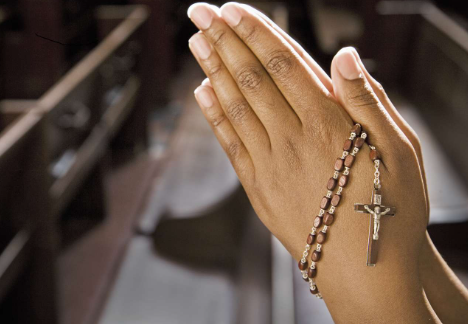
You don’t need an hour of silence and a perfectly ordered life. You need five minutes, a little honesty, and the willingness to show up — again and again.
Let’s begin with a confession that most people of faith rarely say out loud: prayer is hard. Not the idea of it — the idea is beautiful, even natural. The reality is something else. You sit down to pray and your mind immediately produces a grocery list. You resolve to rise fifteen minutes early, and then the alarm goes off and the resolution dissolves. You tell yourself you’ll pray tonight, and tonight becomes tomorrow, and tomorrow becomes a vague intention you carry around like an unpaid bill.
This is not a sign of weak faith. It is the ordinary experience of almost every serious person who has ever tried to build a sustainable prayer life. The saints wrote about it. The mystics complained about it. Desert fathers and mothers built entire spiritual systems around the difficulty of staying present in prayer. Distraction, dryness, and inconsistency are not obstacles on the way to a prayer life — they are part of what a prayer life looks like from the inside.
What separates people who manage to pray regularly from those who don’t is rarely devotion or spiritual intensity. It is usually something far more prosaic: structure. The people who pray daily have, in most cases, found a rhythm that fits the actual contours of their lives rather than the idealized version they wish they were living. They have made peace with imperfection. They have chosen consistency over quality, showing up over performing.
This article is about how to do that — how to build a daily prayer habit that is honest, sustainable, and genuinely nourishing, even in the middle of a busy, complicated, distraction-saturated life.
“Prayer is not asking. It is a longing of the soul.” — Mahatma Gandhi
Start Smaller Than You Think You Should
The most common reason people fail to establish a daily prayer habit is that they begin with an unrealistic commitment. Inspired by a retreat, a powerful homily, or a New Year’s resolution, they decide they are going to pray for thirty minutes every morning. This works beautifully for three days. On the fourth morning, they oversleep, and the habit dies before it has taken root.
The research on habit formation is unambiguous on this point: the smaller the initial commitment, the more likely it is to stick. What behavioral scientists call “habit stacking” — linking a new behavior to an established one — and “minimum viable habits” — making the new behavior almost absurdly easy to begin — are the two most reliable engines of lasting change. These principles apply to prayer exactly as they apply to exercise, healthy eating, or learning a language.
What does a minimum viable prayer habit look like? It might be thirty seconds of silence before your morning coffee. It might be one line — a single sentence spoken honestly to God — as you get into the car. It might be two minutes of reading a psalm before you open your phone. The content matters less than the daily repetition. You are not trying to have a profound spiritual experience; you are trying to build a groove in the road that your day naturally falls into.
Once the habit is established — once prayer has become something you do without deciding to do it, the way you brush your teeth or check the weather — then it can grow organically. But it has to be small enough to survive the bad days first.
The Anchor Habit Technique
One of the most practical tools for building any new habit is to attach it to something you already do reliably every day. Psychologists call this “habit anchoring” — using an existing behavior as the trigger for the new one. For prayer, the most natural anchors are the transitions of the day: waking up, making coffee, eating breakfast, commuting, eating lunch, driving home, getting into bed.
Morning: Pray before you look at your phone. The single best thing many people can do for their prayer life is to decide, firmly and in advance, that they will not check email, social media, or news until they have prayed. Even one minute of intentional prayer before the digital flood begins reorients the day. It establishes, in practice, what you believe in theory: that your relationship with God is more important than your inbox.
Commute: If you drive to work, your commute is potentially twenty to forty minutes of prayer time that currently goes to podcasts or radio. Some of the most sustained prayer lives belong to people who simply turned off the audio in their car and used the drive as an extended conversation with God. You can pray aloud — it helps with focus. You can work through a passage of Scripture you read that morning. You can simply talk, the way you would talk to a close friend sitting in the passenger seat.
Mealtime: Saying grace before meals is one of the oldest and most ecumenical prayer habits in the world. Even a brief, genuine moment of gratitude before eating is a form of prayer. Many people who struggle to pray in the abstract find that anchoring a short prayer to the daily reality of eating — an act that is both physical and symbolic — gives it a naturalness and ease that more formal prayer often lacks.
Bedtime: The examination of conscience — the ancient practice of reviewing the day before sleep, noting where you acted well and where you fell short, and offering it all to God — is one of the most psychologically and spiritually rich prayer forms available. It requires no special equipment, no silent room, no particular posture. It is simply honest reflection. St. Ignatius of Loyola, who developed the formal version known as the Examen, considered it the single most important prayer practice in his spiritual toolkit.
“Be still, and know that I am God.” — Psalm 46:10
Deal With the Problem of Distraction
Every serious practitioner of prayer eventually confronts the problem of the wandering mind. You sit down to pray and within ninety seconds you are mentally planning what you need to buy at the supermarket, replaying an awkward conversation from yesterday, or composing an email you haven’t written yet. This is not a malfunction. It is how the human mind works, especially a mind that is accustomed to constant stimulation.
The first and most important thing to understand about distraction in prayer is that it is not failure. The moment you notice that your mind has wandered and you gently return to prayer — that moment of return is itself an act of prayer. In contemplative traditions both Christian and non-Christian, the practice of returning the wandering attention is considered the core of meditative and contemplative discipline. Every time you notice you’ve drifted and you come back, you are doing exactly what the practice asks of you.
Practically speaking, several tools can help with distraction. Written prayers — whether from the liturgical tradition of your faith, a prayer book, or prayers you have written yourself — give the mind something concrete to hold onto when it threatens to drift. The repetition of a short phrase, what the Christian tradition calls a “breath prayer” — something as simple as “Lord, have mercy” or “Come, Holy Spirit” — can serve as a kind of anchor for attention, a thread you can pick up again every time you notice you’ve dropped it.
Many people find that praying aloud, even quietly, dramatically improves their focus. The physical act of speaking — of forming words with your mouth — keeps more of the brain engaged with the content of the prayer. Others find that writing their prayers in a journal works better than either spoken or silent prayer, because the act of writing is slow enough to keep the mind present. There is no universally correct method. The method that helps you stay present is the right one.
When You Don’t Feel Like Praying
There will be days — sometimes many days in a row — when prayer feels empty. You say the words, you sit in the silence, and nothing happens. There is no sense of presence, no comfort, no illumination. The act of prayer feels hollow, even dishonest. This experience is so universal in the history of spirituality that it has its own name: spiritual dryness, or, in the language of the mystics, desolation.
The temptation during these periods is to stop praying until the feeling returns. This is almost always a mistake. The habit of prayer, like all habits, is maintained partly by the feelings it generates — but the feelings are not the foundation. The foundation is the commitment itself, the daily act of showing up regardless of how it feels. St. Teresa of Calcutta — Mother Teresa — famously experienced nearly fifty years of spiritual darkness in which she felt no consolation in prayer whatsoever. She kept praying anyway.
On the hardest days, the minimum viable prayer might be nothing more than an honest statement to God of where you actually are: “I don’t feel anything. I don’t know if you’re there. But here I am.” That is a prayer. It is not a beautiful one, but it is an honest one, and honesty is the soil in which authentic prayer grows.
Use the Tradition You Have
One of the gifts of belonging to a religious tradition is that you do not have to invent your prayer life from scratch. Every major faith tradition has developed, over centuries and millennia, rich and varied forms of prayer that have sustained countless people through every conceivable circumstance. These forms exist precisely for the moments when you don’t know what to say or how to say it.
In the Christian tradition, the Psalms are perhaps the single greatest resource for someone trying to establish a prayer life. They cover the full range of human experience — gratitude, grief, rage, doubt, wonder, longing, praise, lament. There is a psalm for when you feel abandoned by God, a psalm for when you feel overwhelmed, a psalm for when the world’s beauty moves you to tears, and a psalm for when you’re too tired to feel anything at all. Praying through the psalms — even just one a day — connects you to a tradition of prayer stretching back three thousand years.
The Jesus Prayer of the Eastern Orthodox tradition — “Lord Jesus Christ, Son of God, have mercy on me, a sinner” — is one of the simplest and most powerful prayer forms in the Christian East. It can be prayed anywhere, at any time, in any circumstance, and has been used by monks and farmers and soldiers and mothers for over fifteen centuries. The Rosary, for Catholics, serves a similar function: a structured, embodied form of prayer that can be prayed while walking, driving, or sitting in a waiting room.
For those outside the Christian tradition, the options are equally rich. Jewish davening, Muslim salah, Buddhist meditation practice, Hindu puja — each of these traditions has developed daily prayer forms of extraordinary depth and practicality. The wisdom accumulated in any of these traditions is freely available, and there is no shame in drawing on it deeply.
“Pray as though everything depended on God. Work as though everything depended on you.” — St. Augustine
Make It Honest
Perhaps the most important quality of sustainable prayer is honesty. Prayer that is performative — that is said the way we think prayer should be said rather than the way we actually feel — has a way of becoming hollow over time. The words accumulate on the surface of life without ever penetrating it.
The alternative is prayer that begins where you actually are. If you are angry, start there. If you are frightened, say so. If you are grateful, express it. If you are confused about whether God exists or cares, bring that confusion into the prayer rather than hiding it. The spiritual masters across traditions consistently emphasize that God is less interested in polished religious performance than in genuine encounter. You cannot genuinely encounter someone you are pretending with.
This means that your prayer life will look different from anyone else’s, and that is exactly right. It will fit the particular texture of your life — your schedule, your personality, your relationship with silence, your history with religion, your current circumstances. The goal is not to pray like a monk unless you are a monk. The goal is to pray like yourself: honestly, consistently, with as much attention as you can muster on any given day.
Track It — But Lightly
Habit research consistently shows that tracking a new behavior increases the likelihood that it will stick. The simple act of marking a calendar or checking off a box when you have completed your daily prayer creates what psychologists call a “streak” — a visual record of consistency that becomes, itself, a motivation to continue. The comedian Jerry Seinfeld famously described this as his method for writing jokes every day: mark an X on the calendar for every day you write, and then “don’t break the chain.”
The caution with prayer tracking is to keep it in its proper place. The X on the calendar is a means to an end, not the end itself. The goal is not a perfect record — it is a deepening relationship. If you miss a day, or three days, or a week, the right response is not guilt but simply to begin again, without drama and without excessive self-analysis. The tradition is full of people who started over, again and again, and built rich prayer lives through that stubborn, patient recommitment.
Some people find a simple prayer journal more useful than a calendar. Writing a few sentences each day — what you prayed, what you noticed, what you’re struggling with — creates a record over time that can be remarkably illuminating. Looking back over months of prayer journals, many people find patterns they could not have seen in real time: recurring themes, gradual shifts in perspective, moments of grace they had half-forgotten.
The Long Game
A daily prayer habit, properly understood, is not a short-term project. It is the work of a lifetime. It will go through seasons of richness and seasons of drought. There will be periods when prayer feels effortless and nourishing, when you wonder how you ever lived without it. There will be other periods when it feels like talking to a wall in an empty room. Both are normal. Both are part of what it means to commit to a daily practice rather than chasing a feeling.
What sustains people over the long term is not the quality of any individual prayer session — it is the cumulative weight of the practice itself, the way the habit of daily return shapes not just your prayer but your entire orientation toward life. People who pray daily over years begin, gradually and often imperceptibly, to carry something of the awareness of prayer into the rest of their day. The boundary between “prayer time” and “ordinary time” becomes more porous. Small moments of beauty or difficulty become occasions for brief, spontaneous prayer. The practice of attention that prayer cultivates begins to leach into other areas of life.
This is the real fruit of a daily prayer habit — not the individual sessions, however moving or dry, but the slow transformation of a person who keeps showing up. You don’t have to believe you will reach that point when you start. You just have to be willing to begin.
Start with five minutes tomorrow morning. Before the phone. Before the news. Before the day lays its full weight on you. Five minutes of quiet, of attention, of honest words addressed to whatever you believe is on the other side of them. That is enough to begin.
The spiritual traditions referenced in this article span Christian, Jewish, Muslim, Buddhist, and Hindu practice. Readers are encouraged to explore the prayer forms of their own tradition as a starting point.