
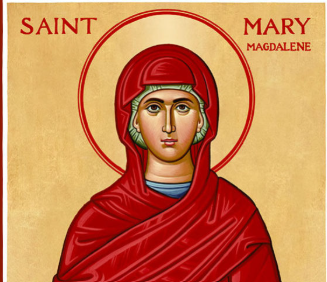
Few figures in Christian history have been so beloved and so misunderstood. For centuries, Mary Magdalene was remembered as the repentant prostitute, a beautiful sinner whose tears washed the feet of Christ. Yet the Gospels never call her that. They say something stranger and more remarkable: that she followed Jesus when others fled, stood at the cross when the male disciples had scattered, and was the first person to see the risen Lord and to proclaim the central claim of Christianity, he is risen.
This is the story of a woman whose real biography is thin, whose legend is vast, and whose significance has only grown as scholars, artists, and believers have peeled back the layers of tradition. It is also a story about how memory works: how a community remembers, forgets, distorts, and sometimes recovers its own heroes.
Historical Background and Early Life
A Town on the Lake
Nearly everything we can say with confidence about Mary’s origins lies in her name. “Magdalene” is not a surname but a place-name: Mary of Magdala. Magdala, the Hebrew Migdal (“tower”), was a prosperous fishing town on the western shore of the Sea of Galilee, a few miles north of Tiberias. Its Greek name, Tarichaea, comes from the Greek for “salted fish,” a clue to its economy. Fish from the lake were processed and preserved there, then shipped across the Roman world.
Archaeology has made Magdala vivid. Excavations begun in 2009 uncovered a first-century synagogue, one of the oldest yet found in Galilee, containing a carved stone block decorated with a seven-branched menorah and other symbols. Streets, ritual baths, and market buildings reveal a town that was busy, mixed, and connected to trade networks. A woman from Magdala did not come from a provincial backwater. She came from a commercial town where money moved, languages mingled, and Roman power was close at hand.
The World of First-Century Galilee
Mary lived in a land under occupation. Rome ruled Judea directly through prefects such as Pontius Pilate, while Galilee was governed by Herod Antipas, a client ruler who had built his new capital, Tiberias, just down the shore. Taxes were heavy, debt was common, and many peasants lost their land. Prophets, messiahs, and rebels regularly appeared with promises of deliverance, and Rome dealt with them harshly. Crucifixion was a public warning to anyone who imagined an alternative kingdom.
Religious life was equally layered. Galilean Jews shared the Temple-centered faith of Jerusalem but lived at a distance from its authorities, with their own customs, synagogues, and hopes. Apocalyptic expectation ran high: many believed God was about to intervene, restore Israel, and set the world right.
A Woman of Means?
We know almost nothing about Mary’s family. The Gospels do not mention a husband, children, or parents, which is itself striking in a culture that normally identified women by their male relatives. Some scholars infer that she was unmarried or widowed and had some independence. Luke tells us she was among a group of women who supported Jesus “out of their resources,” which suggests she had money or property of her own. A woman able to fund an itinerant movement was not destitute, which sits awkwardly with the later image of a fallen woman rescued from the streets.
The historical Mary is therefore best described by what we do not know. We do not know her age, her marital status, or her family. What we do know begins with an encounter.
2. Spiritual Awakening and Path to Sainthood
Seven Demons
Mary’s story enters the written record in the Gospel of Luke, which introduces “Mary, called Magdalene, from whom seven demons had gone out.” Mark’s longer ending repeats the detail. That is the whole account of her call. There is no dramatic scene of conversion, only a brief note that she had been delivered from something terrible.
What did “seven demons” mean? In the ancient world, what we might now call illness, mental distress, or overwhelming suffering was often described in terms of possession. The number seven carried symbolic weight, suggesting fullness or completeness. Mary’s affliction was understood as total. Modern readers may interpret it medically, psychologically, or spiritually, but the Gospel’s point is clear: she was a person who had known deep darkness and had been brought out of it.
Notably, nothing in the text says she was sinful. Possession and sin were different categories in the biblical imagination. Mary was a person afflicted, then healed. That distinction matters enormously for what came later.
From Healing to Discipleship
Healing led to following. Luke says that Jesus traveled through towns and villages proclaiming the kingdom of God, accompanied by the Twelve and by a group of women, among them Mary Magdalene, Joanna (the wife of Herod’s steward Chuza), and Susanna. These women were not decorative. They provided material support and traveled with the movement, which in that culture was unusual and potentially scandalous.
Mary’s path was therefore one of gratitude hardening into loyalty. She did not merely admire a teacher. She reorganized her life around him. We can imagine the long roads of Galilee, the nights in borrowed courtyards, the arguments and the awe, and the slow growth of a conviction that something unprecedented was happening.
Doubt and Fear
The Gospels are quiet about Mary’s interior life, so any account of her doubts must be imaginative. But the circumstances suggest the pressure she faced. As the movement turned toward Jerusalem, the danger grew. Her teacher was arrested, tried, and condemned. Everything she had staked her life on appeared to collapse. The story of Mary Magdalene is not the story of a woman who never wavered. It is the story of a woman who stayed present in the midst of fear and grief.
3. Major Works, Teachings, and Contributions
No Sermons, but a Sentence
Unlike many saints, Mary left no writings in the canonical sense and no recorded sermons. Her central contribution is a single act of testimony. In John’s Gospel, she runs to the disciples and announces, “I have seen the Lord.” That declaration, the first proclamation of the resurrection, makes her the founding witness of the Christian message.
Apostle to the Apostles
Early Christian writers recognized this. Hippolytus of Rome, in the third century, referred to her in terms that anticipated a famous title, and by the Middle Ages theologians such as Thomas Aquinas were calling her apostola apostolorum, “apostle to the apostles.” The reasoning was straightforward. An apostle is one sent with a message, and Jesus himself sent Mary to tell the others. Before there was a church to preach, there was a woman at a tomb carrying news.
The Witness at Cross and Tomb
All four Gospels place Mary Magdalene at the crucifixion or the empty tomb, and usually both. This consistency is historically significant. Women were not considered reliable legal witnesses in the ancient world, so the early church had little reason to invent female witnesses to its most important claim unless the memory was too strong to ignore. Many historians treat her presence as one of the more secure facts in the passion narratives.
Her contribution, then, is not doctrine in the abstract but fidelity. She remained at the cross when it was dangerous, went to the tomb when it was grim, and kept looking when others had given up.
The Gospel of Mary and the Question of Her Teaching
Beyond the New Testament, a body of early Christian writing associates Mary with teaching authority. The Gospel of Mary, a second-century text known from fragments (the main manuscript, the Berlin Codex, was acquired in 1896), portrays her comforting the grieving disciples and relaying private teachings of the Savior about the soul’s ascent past hostile powers. Peter and Andrew question whether Jesus would have spoken privately to a woman, and another disciple, Levi, defends her.
Other texts, including the Gospel of Philip and Pistis Sophia (part of the Nag Hammadi and related discoveries), also feature her prominently. Scholars treat these writings as reflecting later and diverse forms of Christianity, often influenced by Gnostic ideas, and not as reliable history of her life. But they show how important she was in the imagination of early communities, and that debates over her authority were really debates about who could speak for Jesus.
4. Miracles, Signs, and Supernatural Accounts
The Miracle Done to Her
The first miracle associated with Mary is the one worked on her behalf: the deliverance from seven demons. In Christian tradition this is a healing of both body and spirit, and it set the pattern of her life. She is a saint defined by what she received before what she accomplished.
The Garden
The most celebrated supernatural scene is the resurrection appearance in John 20. Mary comes to the tomb in the dark, finds the stone removed, and weeps. She sees a figure she takes for the gardener and asks where the body has been taken. Then he speaks one word: “Mary.” She turns and answers, “Rabbouni,” teacher.
The scene has fascinated theologians for two thousand years. Recognition comes through being called by name, not through sight. Jesus tells her not to cling to him and sends her to the disciples, and from this scene comes the Latin phrase Noli me tangere, “do not touch me,” which became a favorite subject of painters. The encounter has been read as a portrait of the intimate, personal nature of faith and as the moment the church’s mission began.
Interpreters have long debated its details. Why did she fail to recognize him? Why the instruction not to hold on? Some see a transformed body, others a call to move from clinging to proclaiming. These debates reflect the scene’s depth rather than any doubt about its centrality.
Legends of Provence
Later medieval tradition added a rich body of legend. The thirteenth-century Golden Legend by Jacobus de Voragine, along with regional French traditions, told how Mary, Lazarus, and Martha, cast adrift in a rudderless boat, landed on the coast of Provence. There she preached, converted the local ruler of Marseille, and secured the birth of a child through her prayers. She then withdrew to a cave at Sainte-Baume, where she spent decades in contemplation, fed (the story says) by angels who lifted her up daily to hear heavenly music.
None of this is historical in the strict sense, and scholars regard it as a medieval development, likely shaped by local pilgrimage interests and by the merging of several biblical Marys. But it reveals how devotion works: where the Gospels are silent, communities supplied stories that expressed what Mary meant to them.
Authenticity and Interpretation
Theologians approach these accounts differently. Catholic and Orthodox tradition accept the resurrection appearance as historical revelation and treat the Provençal legends as pious tradition. Many modern scholars read John’s scene as theological narrative that nonetheless preserves an early memory of Mary as first witness. Skeptical historians question the resurrection itself, while observing that Mary’s prominence is one of the oddest and most durable features of the earliest tradition.
5. Trials, Persecutions, and Controversies
The Great Conflation
The most consequential controversy in Mary’s history is one she never knew about. In the Gospels, several women named Mary appear, and other unnamed women are described as sinners. In the late sixth century (591), Pope Gregory the Great delivered a homily that identified Mary Magdalene with the anonymous “sinful woman” of Luke 7, who anointed Jesus’ feet, and with Mary of Bethany, the sister of Martha and Lazarus. Gregory’s reading carried tremendous authority, and Western Christianity absorbed it for more than a thousand years.
The result was a transformation. Mary the disciple became Mary the penitent, and, because the sinful woman was assumed to have been sexually immoral, Mary the reformed prostitute. There is no biblical basis for the last step. The error shaped preaching, art, charity, and the church’s image of women for centuries, and it arguably diminished a leader by recasting her as an object of pity.
The Eastern churches never fully adopted the conflation and kept a clearer distinction. In 1969 the Roman Catholic liturgical calendar quietly dropped the identification, and in 2016 Pope Francis, through a decree of the Congregation for Divine Worship, raised her liturgical memorial on 22 July to the rank of a feast, putting her on par with the apostles. The decree explicitly honored her as the “apostle of the apostles.”
Rivalry and Authority
A second controversy concerns her standing among the disciples. In the Gospel of Mary, Peter resists her authority, and similar tensions appear in other texts. Some scholars see in these stories traces of early disputes about women’s leadership and about competing claims to apostolic succession. Others caution that these texts are late, symbolic, and polemical, and that they say more about second-century arguments than about first-century events.
Wife of Jesus?
Few questions generate more public heat than whether Mary Magdalene was married to Jesus. The idea has been popularized by works such as The Holy Blood and the Holy Grail (1982) and, famously, Dan Brown’s novel The Da Vinci Code (2003). It has some basis in passages of the Gospel of Philip that describe Jesus as loving Mary and kissing her, although the manuscript is damaged at the crucial points, and the language of kissing in that text appears symbolic, linked to spiritual impartation. In 2012 a small papyrus fragment nicknamed the “Gospel of Jesus’s Wife” attracted worldwide attention but was later widely judged to be a modern forgery.
The mainstream scholarly view is that no reliable early evidence supports a marriage. Critics of the theory point out that the canonical Gospels never suggest it. Supporters argue that Jesus’ marital status is unrecorded and that the New Testament’s silence is not proof. A careful reader can hold that the question is legitimate to ask while recognizing that the evidence for answering it is very slim. What the controversy undeniably reveals is the modern appetite to reimagine Mary as more than a footnote.
The Cost of Following
Finally, there are the trials intrinsic to her story. She endured the trauma of witnessing an execution, the social risk of association with a condemned man, and, afterward, the disbelief of her own companions. Luke records that the apostles regarded the women’s report as an “idle tale.” To be the first to bring the most important news in history and to be dismissed is a particular kind of suffering, and one many people will recognize.
6. Death, Canonization, and Posthumous Influence
How Did She Die?
The Bible does not say. Tradition offers two main answers. Eastern sources hold that she traveled to Ephesus, in what is now Turkey, and died there, sometimes in connection with the apostle John or the Virgin Mary. Western tradition, as we have seen, sends her to southern France. Neither claim can be verified, and the plain historical answer is that we do not know where or how she died.
Relics and Pilgrimage
Relics followed legend. According to Byzantine accounts, her remains were moved from Ephesus to Constantinople in 886 under the emperor Leo VI. In the West, the Burgundian abbey of Vézelay claimed her relics from the eleventh century and became one of the great pilgrimage centers of medieval Europe, a starting point for the road to Santiago. Later, in 1279, Charles II of Anjou promoted the discovery of a tomb at Saint-Maximin in Provence, and the basilica there became another major shrine, with a skull reliquary that still draws pilgrims.
These competing claims illustrate how holy figures become focal points for institutions, economies, and identities. Whatever the historical truth, thousands of people over centuries have prayed in these places.
Recognition as a Saint
In the early church, sainthood was established by popular veneration and local bishops, long before formal canonization procedures existed. Mary Magdalene was honored as a holy woman from antiquity. Eastern Christians venerate her as one of the myrrh-bearing women, the women who came with spices to anoint Jesus’ body, and keep her feast on 22 July. Western calendars adopted the same date, and Anglican and Lutheran traditions also commemorate her. In the twentieth and twenty-first centuries, official recognition shifted again, culminating in the 2016 elevation to a feast.
An Evolving Legacy
Her reputation has moved in waves: first-century witness, early Christian teacher, medieval penitent, Renaissance muse, Victorian cautionary figure, feminist touchstone, and now a restored apostle. Few saints have had such a wide range of meanings projected onto them, and few have been so persistently reinterpreted.
7. Cultural, Artistic, and Global Impact
Symbols and Feast Day
Her most recognizable symbol is the alabaster jar of ointment, linked to the women who brought spices to the tomb (and, through the conflation, to the anointing at Simon’s house). She is often shown with long, loose hair, a sign of penitence in the medieval imagination, or with a red egg. According to a widely told Eastern legend, Mary brought an egg to the emperor Tiberius as a greeting that “Christ is risen,” and when he scoffed that a human being could no more rise than the egg could turn red, it turned red in his hand. This story is a folk tradition and part of the history of Easter’s red eggs. Her feast is 22 July. She is the patron saint of penitents, contemplatives, pharmacists, perfumers, hairdressers, and women, among others.
Art
Painters returned to her again and again. Fra Angelico’s Noli me tangere in Florence renders the garden scene with quiet radiance. Donatello’s wooden Penitent Magdalene (c. 1455) shows an emaciated, weathered figure, one of the most harrowing sculptures of the Renaissance. Titian painted her in sensual, tearful ecstasy, and Caravaggio and Artemisia Gentileschi gave her dramatic emotional force. Over time the iconography divided: Mary as grieving witness, Mary as repentant hermit, and Mary as eroticized sinner, which says as much about patrons’ tastes as about her.
Literature, Music, and Film
Her story echoes through medieval mystery plays, poetry, and mystical writing. She appears in Bach’s world through Passion music, in modern rock opera in Jesus Christ Superstar (1970), in Nikos Kazantzakis’s controversial novel, and in countless retellings, including The Da Vinci Code and recent films. Contemporary novelists and poets have also written her as a protagonist in her own right, often emphasizing leadership and love rather than sin.
Architecture and Institutions
Churches and chapels bear her name across Europe, including the great Romanesque basilica of Vézelay and the Gothic basilica at Saint-Maximin. Colleges at Oxford and Cambridge (Magdalen and Magdalene) take her name, a reminder of how deeply she entered European culture. A darker legacy attaches to the “Magdalene asylums” and laundries, institutions in Britain, Ireland, and elsewhere for so-called fallen women, which invoked the penitent Magdalene and often subjected inmates to harsh treatment. The last Irish laundry closed in 1996, and the abuses uncovered there remain a painful chapter. It is one of history’s more bitter ironies that a woman wrongly branded a prostitute lent her name to institutions that confined women.
Devotion Worldwide
Today she is venerated across the Catholic, Orthodox, Anglican, and Lutheran traditions, and increasingly in Protestant and non-denominational contexts. Pilgrims visit Magdala in Israel, Vézelay and Sainte-Baume in France, and countless local shrines. Prayers invoke her as intercessor for the grieving, for those struggling with mental distress, and for anyone who feels misjudged.
8. Modern Relevance and Lessons for Today
Faith After Loss
Mary Magdalene is the patron saint of people who stay when staying hurts. Her presence at the cross speaks to anyone who has sat beside a hospital bed, attended a funeral, or kept faith in a situation that appeared hopeless. Her story says that devotion is not only triumph but endurance.
Mental Health and Compassion
The “seven demons” resonate with modern conversations about mental illness. Mary shows that a person once marked by profound affliction can become a leader, a friend, and a trusted witness. Churches and communities today are learning, sometimes slowly, to welcome people with histories of suffering without reducing them to their worst moments. Her story invites compassion without condescension.
Women’s Leadership and Justice
Her restored title, apostle to the apostles, has become central to contemporary discussions about the role of women in churches and society. Whatever one’s theological position on ordination, her case raises a basic question about whose testimony is believed and who is permitted to speak. It is a reminder that voices dismissed as “idle tales” have, at pivotal moments, carried the truth.
Memory, Reputation, and Truth
Perhaps the most modern lesson of all is about reputation. Mary’s centuries as a misrepresented figure remind us how easily stories distort, how powerfully labels stick, and how long it can take to correct them. In an age of viral narratives and quick judgments, her history is a case study in the cost of false characterization and the value of returning to primary sources.
Why It Still Matters
Her story matters because it is about being known. In the garden, recognition comes when her name is spoken. Many people today feel unseen, lost in crowds or reduced to categories. Mary’s story proposes that to be called by name is a profound form of dignity.
9. Reflection and Practical Application
1. Practice faithful presence. Mary’s most distinctive virtue was showing up. Consider who in your life is going through something hard, a bereavement, an illness, a long season of uncertainty, and offer your presence without needing to fix anything. A visit, a call, or a shared meal can echo her loyalty.
2. Do not define people by their worst chapter. Whether it is a friend recovering from a crisis or your own past, remember that healing can be the beginning of a calling. Make room for people to be more than their history, and extend that grace to yourself.
3. Speak up when you have seen something true. Mary was disbelieved and went on proclaiming. If you hold a truth that others dismiss, because of your age, gender, background, or position, speak it with clarity and courage, and without bitterness.
4. Listen for your name. In a noisy life, set aside a few minutes each day for silence, prayer, or reflection, the equivalent of standing in the garden at dawn. Spiritual recognition often comes in quiet moments of attention.
5. Learn to let go. The instruction not to cling can be read as an invitation to move from nostalgia to mission. What are you holding onto that prevents you from moving forward? Gratitude for the past does not require refusing the future.
6. Examine inherited stories. Ask which narratives about people, groups, or yourself you have absorbed without checking. Read the sources, question the labels, and be willing to revise your view.
7. Support those who serve. Luke’s note that the women provided for the movement from their resources is a reminder that generosity and logistics, the unglamorous work of sustaining a community, are part of discipleship. Offer your time, skills, or money where they are needed.
A simple weekly practice might look like this: reread John 20:1–18 slowly, choose one verse to sit with, name one person to whom you will show faithful presence, and note one assumption about someone that you will reconsider.
10. Closing Summary
Mary Magdalene walked out of a prosperous fishing town on the Sea of Galilee carrying a burden the Gospels summarize in two words, seven demons, and she walked into a story that changed the world. She followed when it was costly, stayed when it was terrifying, wept when it was hopeless, and ran with news no one expected to be true.
Then came centuries in which her image was bent: her discipleship overshadowed by a mistaken identity, her authority softened into pity, her name lent to institutions that failed the women they claimed to help. And yet the first witness refused to stay buried. Scholars returned to the texts, artists kept painting the garden, and the church that once blurred her story eventually named her again, officially, as an apostle.
What endures is simple and profound. A woman who had known darkness was called by name and sent to tell the others. She did not have all the answers, and her friends did not at first believe her, but she spoke anyway. That is the measure of her sainthood: not perfection, not a public career, but faithfulness at the moments when faithfulness was hardest.
For anyone on a spiritual path today, whether certain or doubting, grieving or hopeful, Mary Magdalene offers companionship. She reminds us that devotion is often quiet, that truth is sometimes first spoken by the least likely witness, and that the last word over a life is not the label others give it but the name by which we are called. In the half-light of the garden, a voice says her name, and she turns. The invitation, across two thousand years, is to turn as well.