
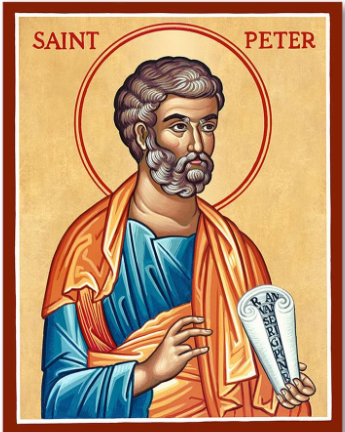
Who Was Saint Peter the Apostle?
Among all the disciples of Jesus Christ, few have captured the imagination of Christians across the centuries quite like Saint Peter the Apostle.
Peter was not born into political power. He was not a priest in Jerusalem, a Roman aristocrat, a famous philosopher, or a wealthy merchant. He began his life as a fisherman working beside the waters of Galilee.
Yet this ordinary man would eventually become one of the most influential figures in Christian history.
The New Testament presents Peter as one of Jesus Christ’s closest disciples. He witnessed extraordinary moments in Jesus’ ministry, declared Jesus to be the Messiah, walked briefly upon water, saw Christ transfigured, promised never to abandon Him, denied Him three times, wept bitterly over his failure, encountered the risen Christ, preached boldly at Pentecost, performed miracles, endured imprisonment and became one of the principal leaders of the early Christian Church.
Christian tradition later associated Peter especially with Rome and with martyrdom during the reign of Emperor Nero.
For Roman Catholics, Peter holds an additional importance because he is traditionally regarded as the first pope and the apostolic foundation upon which the ministry of the bishops of Rome developed.
Eastern Orthodox Christians likewise honor Peter as one of the foremost apostles, although Orthodox theology differs from Roman Catholicism over the exact meaning of papal authority and succession.
Many Protestants also hold Peter in extraordinary esteem as a major apostle, preacher and biblical example of God’s transforming grace.
Yet perhaps the greatest reason Christians continue to connect with Peter is far more personal.
Peter was imperfect.
He was courageous, yet sometimes afraid.
He was faithful, yet capable of failure.
He understood Jesus profoundly in one moment and misunderstood Him completely in another.
He could speak boldly and act impulsively.
He could stand beside Christ and later deny that he even knew Him.
And still, Jesus did not abandon Peter.
That may be the most powerful message of his story.
Peter’s life demonstrates that God does not necessarily choose perfect people. He transforms willing people.
His journey from fisherman to apostle is ultimately a story of calling, failure, repentance, restoration, courage, sacrifice and grace.
Historical Background and Early Life of Saint Peter
Peter Before He Became an Apostle
Before he became known throughout history as Saint Peter, he was known as Simon.
The New Testament also uses the name Cephas, derived from an Aramaic word connected with “rock,” while the Greek equivalent Petros gives us the familiar name Peter.
Peter was the brother of Andrew, another of Jesus’ earliest disciples.
According to the Gospel of John, Peter was associated with Bethsaida, a fishing community near the Sea of Galilee. Other Gospel accounts strongly associate him with Capernaum, where he appears to have lived and worked.
This places Peter within the social world of first-century Galilee.
Understanding that environment helps us appreciate the extraordinary transformation that followed.
Life in First-Century Galilee
Galilee existed under the shadow of the Roman Empire.
Rome dominated much of the Mediterranean world, exercising military, economic and political control over conquered territories.
Jewish society during Peter’s lifetime lived with a complicated relationship between Roman rule, Jewish religious identity and hopes for God’s deliverance.
Different Jewish groups responded differently to the political and spiritual circumstances of the time.
The Pharisees emphasized careful observance of religious law and tradition.
The Sadducees were closely associated with priestly and temple leadership.
Other groups adopted more separatist lifestyles.
Still others resisted Roman domination politically or violently.
Ordinary families, meanwhile, continued working, raising children, fishing, farming, trading and worshipping while living within this atmosphere of imperial power and religious expectation.
Peter grew up in this world.
He would have been surrounded by the Scriptures of Israel, the memory of God’s covenant, stories of Abraham, Moses and David, prophetic promises, synagogue worship and hopes that God would eventually act decisively on behalf of His people.
When Jesus appeared proclaiming the kingdom of God, therefore, Peter was not hearing the language of God’s reign for the first time. What was new was Jesus Himself.
Peter the Fisherman
The Gospels present Peter as a professional fisherman. Fishing in the ancient world involved demanding physical labor.
It required patience, knowledge of weather and water, the maintenance of boats and nets, teamwork and the ability to cope with uncertainty.
Some nights produced good catches.
Others produced almost nothing.
Peter therefore came from a profession that required perseverance.
His hands would have been familiar with ropes, nets, fish, boats and the rough realities of working life.
This background stands in dramatic contrast to the position Peter would eventually occupy in Christian memory.
He moved from pulling nets out of Galilee to preaching before crowds and confronting powerful authorities.
Yet his fishing background never disappeared entirely from his story.
Jesus transformed the language of Peter’s old occupation into a description of his new calling.
Peter would become a fisher of people.
Was Saint Peter Married?
The New Testament strongly indicates that Peter was married.
The Gospels record Jesus healing Peter’s mother-in-law.
This simple detail gives us an important glimpse into Peter’s personal life.
He was not necessarily a young, unattached wanderer when Jesus called him.
He had family obligations.
He had a home.
He had responsibilities.
His decision to follow Jesus therefore carried a genuine cost.
Discipleship disrupted an existing life.
Peter did not know when he first encountered Jesus that his name would one day be spoken across continents.
He simply knew that something—or rather Someone—was calling him beyond the life he had always known.
Saint Peter’s Spiritual Awakening and Call by Jesus
“Follow Me”
One of the most famous moments in the Gospels is Jesus calling fishermen to follow Him.
Peter and his brother Andrew become part of this story.
Jesus’ invitation was radical.
Following a teacher in the ancient Jewish world could involve becoming a disciple who learned not merely information but an entire way of life.
Peter began traveling with Jesus.
He listened to His teaching.
He witnessed His miracles.
He watched Jesus respond to sinners, religious leaders, the sick, the poor, women, children, foreigners and social outsiders.
Slowly, Peter’s understanding of God was being challenged and transformed.
Peter’s Miraculous Catch of Fish
Luke’s Gospel contains a particularly powerful account of Peter’s call.
Peter and his companions have worked through the night without catching anything.
Jesus tells them to lower their nets again.
Peter initially points out the obvious problem: they have already tried.
Still, he obeys.
The resulting catch is so enormous that the nets begin to break.
Peter’s reaction is striking.
Instead of simply celebrating the business opportunity, he becomes overwhelmed by his own unworthiness.
The encounter reveals something deeper than fish.
Peter has begun to recognize that he is standing in the presence of unusual holiness and power.
Jesus responds not with rejection but with calling.
Peter’s awareness of his weakness becomes the doorway into his mission.
This pattern will repeat throughout his life.
Peter’s Confession: “You Are the Christ”
One of the defining moments in Peter’s relationship with Jesus occurs near Caesarea Philippi.
Jesus asks His disciples what people are saying about Him.
Different answers circulate.
Some believe Jesus is connected with John the Baptist, Elijah, Jeremiah or another prophet.
Then Jesus makes the question personal.
Who do you say that I am?
Peter answers.
He declares Jesus to be the Messiah—the Christ—and, in Matthew’s account, the Son of the living God.
This is one of the most important confessions of faith in the New Testament.
Jesus responds by blessing Peter and speaking the famous words associated with Peter’s name and the “rock” upon which the Church will be built.
He also speaks of giving Peter the keys of the kingdom of heaven.
These verses eventually became central to Christian debates concerning Peter’s authority.
Roman Catholic theology understands Matthew 16 as providing profound biblical support for Peter’s unique pastoral authority and for the later ministry associated with papal succession.
Eastern Orthodox theology recognizes Peter’s special prominence while interpreting authority within the broader apostolic and episcopal communion.
Many Protestant interpreters emphasize Peter’s confession of Christ as the foundational “rock,” rather than understanding the passage as establishing later papal jurisdiction.
Despite these differences, nearly all major Christian traditions recognize that Peter occupies an exceptionally important place among Jesus’ apostles.
Peter’s Weakness, Doubts and Spiritual Transformation
Walking on Water—and Beginning to Sink
Peter’s personality appears vividly in Matthew’s account of Jesus walking upon the Sea of Galilee.
When Peter sees Jesus on the water, he asks to come toward Him.
Jesus calls him.
Peter steps out of the boat.
For a moment, he walks upon the water.
Then fear takes over.
Peter notices the wind and begins to sink.
He cries out for Jesus to save him.
Jesus immediately reaches out.
Few biblical scenes summarize Peter’s character so perfectly.
He possesses enough faith to leave the boat.
He also possesses enough fear to sink.
Yet when he begins drowning, he knows whom to call.
Peter’s faith was genuine but still developing.
The same could be said of many believers today.
Faith does not necessarily mean never experiencing fear.
Sometimes faith means crying out to Christ while fear is pulling you downward.
Peter Misunderstands the Cross
Soon after Peter correctly identifies Jesus as the Messiah, he makes another mistake.
Jesus begins explaining that suffering and death lie ahead.
Peter resists.
His idea of Messiah apparently does not include humiliation and crucifixion.
He wants glory without suffering.
Victory without the cross.
Jesus responds forcefully.
The incident demonstrates that Peter could receive genuine spiritual insight while still misunderstanding the path of discipleship.
Recognizing Jesus correctly did not mean Peter understood Jesus completely.
Spiritual maturity would require more.
Peter’s Denial of Jesus
The darkest moment in Peter’s story occurs during the arrest and trial of Jesus.
Earlier, Peter had confidently declared that even if others abandoned Jesus, he would remain loyal.
Jesus warned him that before the rooster crowed, Peter would deny Him three times.
Peter could hardly imagine it.
Then the crisis came.
Jesus was arrested.
The disciples scattered.
Danger surrounded anyone associated with Him.
Peter followed at a distance.
When people began identifying him as one of Jesus’ followers, fear overwhelmed his earlier confidence.
Peter denied knowing Jesus.
Then he denied Him again.
Then a third time.
The rooster crowed.
Peter remembered Jesus’ warning.
And he broke down.
The Gospels preserve Peter’s tears.
This is important.
Early Christians could easily have hidden such an embarrassing story about one of their greatest leaders.
Instead, they preserved it.
Peter’s failure became part of Christian Scripture.
Why?
Because Christianity does not ultimately proclaim the greatness of Peter.
It proclaims the greatness of grace.
Peter’s Restoration After the Resurrection
The Gospel of John describes a deeply moving encounter between the risen Jesus and Peter.
Jesus asks Peter three times:
Do you love me?
The repetition is painful.
Peter had denied Jesus three times.
Now three opportunities are given for affirmation.
Each declaration of love is followed by responsibility.
Feed my lambs.
Tend my sheep.
Feed my sheep.
Peter’s restoration is therefore not sentimental.
Forgiveness leads to mission.
Jesus does not merely tell Peter, “Forget everything that happened.”
Instead, Peter’s failure becomes part of the man who will now shepherd others.
This is one of the most comforting lessons in the entire story of Saint Peter.
God can restore people after devastating mistakes.
A person’s worst moment does not automatically have to become the final definition of their life.
Peter denied Christ.
Yet Christ still entrusted Peter with responsibility.
Failure was not the end of his calling.
Saint Peter at Pentecost
After Jesus’ resurrection and ascension, Peter emerges prominently in the Acts of the Apostles.
The difference in Peter is astonishing.
The man who once feared being identified with Jesus now preaches publicly about Him.
At Pentecost, the Holy Spirit descends upon the disciples.
Peter stands before a large crowd and explains what is happening through the language of Scripture and the message of Christ’s death and resurrection.
According to Acts, thousands respond.
This moment marks a dramatic turning point.
Peter the frightened disciple becomes Peter the public witness.
Something has changed profoundly.
For Christians, the explanation is not simply increased confidence.
It is the empowering presence of the Holy Spirit.
Major Teachings and Contributions of Saint Peter
Peter’s contribution to Christianity goes far beyond one sermon.
Preaching Christ’s Resurrection
At the heart of Peter’s preaching is the conviction that Jesus, although crucified, has been raised from the dead.
This message stands at the center of apostolic Christianity.
The apostles are not merely promoting Jesus as an inspiring moral teacher.
They proclaim Him as the risen Lord.
Peter repeatedly returns to the resurrection in Acts.
Christian hope is therefore rooted not merely in Jesus’ teachings but in what believers understand God to have accomplished through Jesus’ death and resurrection.
Repentance and Forgiveness
Peter’s preaching frequently calls people toward repentance.
This is particularly meaningful considering Peter’s own experience.
He understands failure personally.
Repentance is not merely an abstract theological idea to him.
Peter himself knows what it means to fall, recognize one’s failure and be restored.
Courage Before Authorities
When Peter and other apostles are commanded to stop preaching, they refuse.
Peter famously declares that obedience to God must take precedence over obedience to human authorities when the two come into direct conflict.
This principle later influenced Christian thinking about conscience, persecution and moral courage.
Caring for the Christian Community
Peter also emerges as a shepherd.
His responsibility is not simply to preach publicly but to help guide the developing Christian community through moments of uncertainty, disagreement and expansion.
Did Saint Peter Write Books of the Bible?
Two New Testament letters bear Peter’s name:
1 Peter and 2 Peter.
Traditional Christian teaching attributes these letters to Peter the Apostle.
First Peter contains powerful teachings concerning suffering, holiness, Christian identity, perseverance and hope.
One of its dominant themes is how Christians should live faithfully when facing hostility or hardship.
Second Peter warns against false teachers and encourages believers toward spiritual maturity and steadfastness.
Modern biblical scholarship has debated the authorship of both letters, especially 2 Peter.
Questions include language, literary style, historical setting and the possibility that secretaries or later disciples participated in transmitting Petrine teaching.
For Christian readers, the debate need not erase the theological significance of these writings.
The letters remain part of the New Testament canon and have profoundly shaped Christian teaching about holiness, suffering, hope and perseverance.
Miracles of Saint Peter
The Acts of the Apostles describes several extraordinary miracles associated with Peter.
For Christians, these signs demonstrate the continuing work of Christ through His apostles.
Historians approach miracle accounts differently, asking how ancient sources developed and what can be independently established.
Both perspectives should be distinguished carefully.
Healing the Man Unable to Walk
Acts 3 tells of Peter and John encountering a man who had been unable to walk.
The man expected financial help.
Peter told him that he did not possess silver or gold but offered something else.
In the name of Jesus Christ, Peter commanded the man to rise and walk.
The man was healed.
Peter immediately rejected the idea that the miracle came from his own power or holiness.
He directed attention toward Jesus.
This principle is fundamental.
Peter is never meant to replace Christ.
His ministry points toward Christ.
The Shadow of Peter
Acts later describes sick people being brought into the streets in the hope that even Peter’s shadow might fall upon them.
The passage reflects the extraordinary reputation Peter had acquired within the early Christian community.
The symbolism is powerful.
The fisherman once hiding in fear has become associated with healing and hope.
The Healing of Aeneas
In Lydda, Peter encounters a man named Aeneas who had been bedridden for years.
Peter tells him that Jesus Christ heals him.
The man rises.
Again, Peter attributes the miracle to Christ.
Raising Tabitha from the Dead
One of Peter’s most dramatic miracle stories involves a woman named Tabitha, also called Dorcas.
She was known for charitable works and helping others.
After her death, members of the Christian community summon Peter.
He prays.
Then he tells her to rise.
According to Acts, she opens her eyes and sits up.
The narrative strongly resembles resurrection miracles associated with Jesus and with prophets in the Hebrew Scriptures.
The theological message is unmistakable: the power of the risen Christ continues working through the apostolic mission.
Peter’s Miraculous Escape from Prison
Peter also experiences a miracle personally.
King Herod has him arrested and heavily guarded.
During the night, Acts describes an angel appearing.
Peter’s chains fall away.
The prison doors open.
He walks out.
Initially, Peter does not fully understand what is happening.
Eventually, he realizes that he has escaped.
For persecuted Christians, the story became a powerful reminder that political rulers do not possess ultimate authority over God’s purposes.
Peter and Cornelius: A Revolution in the Early Church
One of the most important events in Peter’s ministry involves a Roman centurion named Cornelius.
This story transformed the early Christian understanding of who could fully belong to the Church.
Christianity began within Judaism.
Jesus was Jewish.
The apostles were Jewish.
The Scriptures they read were Jewish.
The earliest disciples worshipped within a Jewish religious world.
The question eventually became unavoidable:
What happens when Gentiles believe in Jesus?
Must they first adopt the full requirements of Jewish identity?
Peter initially carried assumptions shaped by his religious upbringing.
Then he experienced a vision involving animals considered ritually unclean.
A voice instructed him to eat.
Peter objected.
The response challenged him not to declare unclean what God had made clean.
Soon afterward, Peter was invited to the household of Cornelius.
This was socially and religiously significant.
Peter eventually concluded that God does not show favoritism based upon ethnic identity.
When the Holy Spirit came upon Cornelius and his household, Peter accepted their baptism.
This episode became one of the decisive turning points in Christianity’s development from a Jewish messianic movement into an international faith.
Peter and Paul: Conflict Among Apostles
It can be tempting to imagine that the earliest Christian leaders never disagreed.
The New Testament tells a more realistic story.
Paul’s Letter to the Galatians records a confrontation between Paul and Peter, whom Paul calls Cephas.
The controversy concerned table fellowship between Jewish and Gentile believers.
Peter had previously eaten with Gentile Christians but apparently withdrew under pressure from others.
Paul challenged him publicly.
The incident is theologically important.
Even apostles could experience inconsistency.
Even respected leaders could be corrected.
The early Church was not a community in which every difficult issue was resolved without tension.
Peter’s sainthood therefore should not be misunderstood as perfection.
Holiness does not erase humanity.
Trials, Arrests and Persecution of Saint Peter
Peter’s public preaching eventually brought opposition.
The religious authorities in Jerusalem repeatedly confronted the apostles.
Peter and John were arrested after public preaching.
They were questioned.
They were ordered to stop speaking in Jesus’ name.
They refused.
Peter’s courage became increasingly evident.
This is the same man who had previously denied Jesus because he feared the consequences of association with Him.
Now he openly accepts those consequences.
The transformation is striking.
Peter learned that courage is not simply feeling fearless.
Courage is choosing faithfulness while fear and danger remain real.
Did Saint Peter Go to Rome?
Christian tradition strongly associates Peter with Rome. Although Acts does not provide a complete narrative of Peter traveling to Rome, early Christian testimony connects him with the city. Rome eventually became the center of the Western Church, and Peter’s association with Rome became especially important within Catholic Christianity.
According to Catholic tradition, Peter exercised ministry in Rome and eventually died there as a martyr. Other Christian traditions also accept ancient traditions connecting Peter to Rome while disagreeing about the theological conclusions Catholicism draws regarding papal authority.
The historical question and the theological question should therefore be separated. One may accept that Peter ministered and died in Rome without necessarily accepting every later theological claim concerning the papacy.
How Did Saint Peter Die?
According to ancient Christian tradition, Saint Peter was martyred in Rome during the persecution of Christians associated with Emperor Nero, traditionally placed in the 60s AD.
The New Testament does not describe Peter’s death directly.
The Gospel of John, however, contains language that Christians have traditionally understood as anticipating Peter’s martyrdom.
Later Christian tradition states that Peter was crucified.
An especially famous tradition maintains that Peter requested to be crucified upside down because he considered himself unworthy to die in exactly the same manner as Jesus Christ.
This detail comes from later Christian tradition rather than the New Testament itself.
Historically, scholars distinguish between the strong early tradition of Peter’s martyrdom in Rome and later details concerning the exact manner of his execution.
Regardless of the precise historical reconstruction, the Christian memory of Peter is ultimately the memory of a martyr.
The man who once denied Christ in fear eventually became willing, according to tradition, to die because he would no longer deny Him.
That transformation gives Peter’s martyrdom extraordinary emotional power.
Saint Peter’s Tomb and Saint Peter’s Basilica
Few Christian pilgrimage sites are more famous than Saint Peter’s Basilica in Vatican City.
The enormous Renaissance church is traditionally built over the location associated with Peter’s burial.
Archaeological excavations beneath the basilica uncovered an ancient Roman necropolis and structures connected with the traditional veneration of Peter’s grave.
The question of whether particular bones discovered near the site can be definitively identified as Peter’s remains continues to involve historical and archaeological interpretation.
For believers, however, the importance of the location extends beyond scientific certainty.
Christians were venerating the area as connected to Peter very early in the history of the Church.
Eventually, Emperor Constantine built a major basilica over the traditional burial site.
Centuries later, the present Saint Peter’s Basilica replaced the ancient structure.
The symbolism is almost overwhelming.
Beneath one of Christianity’s largest and most magnificent churches lies the memory of a fisherman.
Peter began with nets.
His name became associated with domes, altars, pilgrims, councils, popes, paintings and centuries of Christian history.
Saint Peter and the Origins of the Papacy
No discussion of Saint Peter can avoid the question of the papacy.
Roman Catholic theology understands Peter as possessing a unique leadership role among the apostles.
Matthew 16—particularly Jesus’ references to the rock, the Church and the keys of the kingdom—is central to this understanding.
Catholic tradition teaches that the bishops of Rome inherit a particular pastoral ministry connected with Peter.
This is why popes are often described as successors of Saint Peter.
Eastern Orthodox Christians strongly honor Peter but generally reject the later Catholic understanding of universal papal jurisdiction.
Protestant traditions vary considerably, although most do not accept Catholic papal claims.
These disagreements have shaped Christian history for centuries.
Yet Christians across traditions can still recognize Peter as a foundational apostolic figure.
Symbols of Saint Peter
Christian artists developed several recognizable symbols connected with Peter.
The Keys
The most famous are the keys.
They derive from Jesus’ statement about giving Peter the keys of the kingdom of heaven.
In Christian art, Peter is frequently shown holding one or two keys.
The crossed keys eventually became especially associated with the papacy and the Holy See.
The Rooster
A rooster sometimes symbolizes Peter because of his threefold denial before the rooster crowed.
Unlike the keys, which emphasize authority, the rooster emphasizes weakness, repentance and restoration.
Together these symbols capture the remarkable paradox of Peter.
He is both the apostle with the keys and the disciple who denied Christ.
The Upside-Down Cross
The inverted cross became associated with Peter because of the tradition that he was crucified upside down.
Historically, this symbol was originally connected with Peter’s humility and martyrdom.
Modern popular culture sometimes interprets an inverted cross differently, but within traditional Christian symbolism it may specifically represent Saint Peter.
Fishing Nets and Fish
Because Peter was a fisherman, nets, boats and fish may also appear in artistic portrayals of him.
These symbols connect his ordinary beginning with his apostolic calling.
Feast Day of Saint Peter
The principal feast associated with Peter is celebrated on June 29, when many Christian traditions commemorate Saints Peter and Paul together.
Their pairing is deeply meaningful.
Peter symbolizes continuity with Jesus’ original circle of disciples.
Paul symbolizes Christianity’s dramatic missionary expansion among the Gentiles.
Both are traditionally associated with martyrdom in Rome.
Together they represent apostolic witness, missionary courage and sacrifice.
Catholic tradition also observes the Feast of the Chair of Saint Peter on February 22, emphasizing Peter’s pastoral and teaching ministry.
Saint Peter in Christian Art, Architecture and Culture
Few biblical personalities have inspired more visual art than Peter.
Renaissance artists repeatedly portrayed key moments of his life.
Scenes include:
Peter receiving the keys.
Peter’s miraculous catch of fish.
Peter attempting to walk upon water.
Peter denying Jesus.
Peter’s restoration.
Peter healing the sick.
Peter escaping from prison.
Peter’s crucifixion.
Michelangelo created a powerful depiction of Peter’s martyrdom in The Crucifixion of Saint Peter.
Perugino’s famous Christ Giving the Keys to Saint Peter visually presents Peter’s role in Christian authority.
Churches, cathedrals, chapels and religious institutions throughout the world bear his name.
His influence extends far beyond Europe.
Christian communities across Africa, Asia, Latin America, North America, Oceania and the Middle East celebrate churches, schools and institutions dedicated to Saint Peter.
The fisherman from Galilee became a global Christian figure.
What Can Christians Learn from Saint Peter Today?
Peter’s world may seem distant from ours.
Roman emperors no longer rule the Mediterranean.
Fishing villages in Galilee no longer occupy the same political world.
Yet Peter’s internal struggles feel remarkably modern.
Lesson 1: God Can Use Imperfect People
Peter’s life destroys the idea that God only works through people who have everything together.
Peter made mistakes.
He misunderstood Jesus.
He reacted emotionally.
He became afraid.
He failed publicly.
Yet God continued shaping him.
This should encourage Christians who sometimes feel disqualified because of past failures.
God’s work in a person’s life does not require a flawless past.
Lesson 2: Failure Is Not the Same as Final Defeat
Peter’s denial could have destroyed him.
Instead, it became one chapter in his transformation.
The difference was repentance and restoration.
Christians should never romanticize wrongdoing.
But neither should they assume that every failure permanently destroys a person’s usefulness.
Repentance opens the possibility of restoration.
Lesson 3: Leadership Is Service
Jesus does not restore Peter simply so that Peter can feel important.
He tells him to care for the flock.
Biblical leadership is therefore not primarily about status.
It is stewardship.
Parents lead.
Pastors lead.
Teachers lead.
Business owners lead.
Public officials lead.
Older siblings sometimes lead.
Anyone entrusted with responsibility should ask Peter’s question:
Am I caring for the people entrusted to me, or simply enjoying the authority attached to my position?
Lesson 4: Courage Can Grow
Peter did not begin as the fearless apostle of Acts.
He became courageous.
That is encouraging.
Some people assume they are simply “not brave.”
Peter’s story suggests that courage can develop through experience, conviction and spiritual growth.
The man who denied Jesus eventually preached openly about Him.
Lesson 5: Christians Must Remain Teachable
Peter’s encounter with Cornelius forced him to reconsider assumptions he had carried for years.
That required humility.
Modern believers also need teachability.
Sometimes our strongest opinions come not from Scripture but from culture, family, fear or habit.
Peter’s life encourages believers to ask whether God might be challenging assumptions they have never seriously examined.
Lesson 6: The Church Should Cross Human Boundaries
The Cornelius story teaches something powerful about Christian community.
The Gospel cannot be restricted to one ethnicity, nationality, social class or cultural background.
Christianity eventually spread throughout the world partly because the early Church recognized that Gentiles could belong fully to God’s people.
For a modern world divided by race, nationality, economic class and political identity, that message remains urgent.
Practical Ways to Apply Saint Peter’s Example
Reading about saints should lead to more than admiration.
Their lives should encourage examination and action.
Admit Your Weakness Honestly
Peter’s transformation begins repeatedly with recognizing his limitations.
Spiritual growth becomes difficult when people spend all their energy pretending they have none.
Return to God After Failure
Peter did not allow his denial to become permanent separation.
Christians who fall should repent rather than simply disappear in shame.
Take One Courageous Step
Peter once stepped out of a boat.
You may not need to walk on water.
Your courageous step may involve apologizing, telling the truth, leaving a destructive habit, forgiving someone, asking for help or obeying a conviction you have avoided.
Serve Someone Quietly
Peter’s commission was to feed Christ’s sheep.
Find someone whose burden you can lighten.
Offer practical help.
Listen.
Encourage.
Pray.
Serve without needing recognition.
Examine Your Prejudices
The story of Cornelius challenges believers to examine who they unconsciously consider less worthy of respect, fellowship or compassion.
Keep Christ at the Center
Peter’s miracles point toward Jesus.
His preaching points toward Jesus.
His restoration comes from Jesus.
His authority exists because of Jesus.
The Christian lesson is simple:
Do not let admiration for any leader replace devotion to Christ.
Frequently Asked Questions About Saint Peter the Apostle
Who was Saint Peter in the Bible?
Saint Peter was one of the Twelve Apostles of Jesus Christ and one of His closest disciples. Originally named Simon, he was a fisherman from Galilee and the brother of Andrew. He became a major leader in the earliest Christian Church.
What was Saint Peter’s original name?
His original name was Simon. Jesus also called him Cephas, an Aramaic name connected with the word “rock.” The Greek form Petros became Peter.
What did Saint Peter do before following Jesus?
Peter worked as a fisherman around the Sea of Galilee.
Was Saint Peter married?
The Gospels mention Peter’s mother-in-law, indicating that Peter was married.
Why did Jesus call Peter the rock?
In Matthew 16, after Peter confesses Jesus as the Messiah, Jesus associates Peter with the word “rock” and speaks about building His Church. Christian traditions differ over the precise theological interpretation of this passage.
Did Peter really deny Jesus three times?
Yes. All four canonical Gospels contain traditions concerning Peter’s denial of Jesus during the events surrounding Christ’s arrest and trial.
Why did Peter deny Jesus?
The Gospel accounts strongly suggest fear played a major role. Jesus had been arrested, and association with Him could have placed Peter in danger.
Did Jesus forgive Peter?
Yes. John 21 presents a powerful scene in which the risen Jesus restores Peter and commands him to care for His followers.
What miracles did Saint Peter perform?
Acts attributes several miracles to Peter, including healing a man unable to walk, healing Aeneas, raising Tabitha, and other healings associated with his ministry.
Was Saint Peter the first pope?
The Roman Catholic Church traditionally recognizes Peter as the first pope and understands later bishops of Rome as succeeding to his particular pastoral ministry. Other Christian traditions understand Peter’s role differently.
How did Saint Peter die?
Ancient Christian tradition holds that Peter was martyred by crucifixion in Rome during the first century, probably during the reign of Emperor Nero.
Was Saint Peter crucified upside down?
A later Christian tradition says Peter requested upside-down crucifixion because he felt unworthy to die in the same manner as Jesus. This detail is traditional rather than directly recorded in the New Testament.
Where is Saint Peter buried?
Christian tradition identifies Peter’s burial place beneath Saint Peter’s Basilica in Vatican City. Archaeological excavations beneath the basilica have uncovered an ancient necropolis and evidence connected with early Christian veneration of the site.
What is Saint Peter’s symbol?
His most famous symbol is the key or pair of keys, representing the “keys of the kingdom” described in Matthew 16. Other symbols include the rooster, fishing nets, fish and an inverted cross.
When is Saint Peter’s feast day?
The principal Feast of Saints Peter and Paul is celebrated on June 29 in several major Christian traditions.
The Enduring Legacy of Saint Peter
Nearly two thousand years separate modern Christians from the world Peter knew.
Empires have risen and disappeared.
Languages have changed.
Churches have divided and reunited.
Theology has developed.
Nations have been created.
Cathedrals have been built.
Millions of Christians have lived and died.
Yet Peter remains.
His words remain in Scripture.
His failures remain in Scripture too.
Perhaps that is the secret of his enduring appeal.
Peter is not merely an icon painted with a golden halo.
Before he became an icon, he was a man.
A man who worked.
A man who became tired.
A man who sometimes spoke before thinking.
A man who loved Jesus.
A man who misunderstood Jesus.
A man who became frightened.
A man who promised more than he could initially deliver.
A man who failed spectacularly.
And a man who discovered that failure did not have to be the end.
Peter’s Christianity was not built upon pretending that his denial had never happened.
It was built upon encountering Christ after the denial.
That difference matters.
Christian grace does not require rewriting history.
It transforms the future.
Peter could never undo the moment when he said he did not know Jesus.
But he could decide what he would do when Jesus called him again.
And he answered.
Final Reflection: From Fisherman to Apostle
Imagine Peter at the beginning.
The morning air hangs above the Sea of Galilee.
Nets lie across the boat.
His hands smell of fish and salt water.
His concerns are probably ordinary.
Will today’s catch be good?
Will there be enough income?
What needs repairing?
What will tomorrow bring?
Then Jesus enters his life.
Peter could not possibly have understood what that invitation would eventually cost.
Following Christ would take him away from familiar shores.
It would expose his weaknesses.
It would challenge his prejudices.
It would destroy some of his assumptions.
It would place him in conflict with authorities.
It would force him to confront the shame of his own denial.
It would require him to become courageous.
And, according to ancient Christian tradition, it would ultimately cost him his life.
But Peter followed.
He did not follow perfectly.
That may be the most important detail.
He stumbled after Jesus.
He misunderstood after Jesus.
He argued after Jesus.
He became frightened after Jesus.
He failed after Jesus.
And then he returned to Jesus.
That is why Peter’s story continues to speak powerfully to ordinary Christians.
Many believers imagine spiritual greatness as a straight road.
Peter’s road was anything but straight.
There were boats and storms.
Mountaintops and courtyards.
Confessions and rebukes.
Miracles and mistakes.
Prisons and preaching.
Fear and courage.
Tears and restoration.
And throughout everything, Christ continued calling him forward.
Peter eventually became one of the central witnesses of the Christian faith.
According to tradition, his final destination was Rome, the heart of the very empire that had once appeared overwhelmingly powerful.
There, the Galilean fisherman would give his final testimony.
The empire that executed Christians eventually changed.
Nero died.
Rome transformed.
Generations passed.
Yet the apostle whom imperial power supposedly silenced became permanently associated with the city.
Eventually, an enormous basilica rose over the place traditionally connected with his grave.
Millions of pilgrims would travel there.
Artists would paint him.
Theologians would debate him.
Churches would bear his name.
Christians around the world would read his story.
But Saint Peter’s greatest monument is not Saint Peter’s Basilica.
It is transformation.
His life testifies that God can turn fear into courage.
Failure into wisdom.
Impulsiveness into leadership.
Prejudice into openness.
Shame into testimony.
A fisherman into an apostle.
And perhaps this is why the story of Saint Peter still matters so deeply.
Some readers may feel like Peter standing confidently beside Jesus.
Others may feel like Peter sinking beneath the waves.
Some may feel like Peter declaring their faith boldly.
Others may feel like Peter weeping after failure.
Some may be facing their own Cornelius moment, discovering that God is challenging an old assumption.
Some may be standing before a difficult decision, wondering whether courage will overcome fear.
Wherever you find yourself, Peter’s life offers a simple but profound invitation:
Keep following Christ.
Do not let your strongest moment make you proud.
Do not let your weakest moment make you hopeless.
Remain teachable.
Remain humble.
Repent when necessary.
Serve others.
Stand for truth.
And when you fall, return to the One who called you.
Because Saint Peter’s life teaches us that holiness is not the story of people who never stumble.
It is the story of people who continue allowing God to transform them.
Peter began as Simon, a fisherman casting nets into the waters of Galilee.
Christian history remembers him as Saint Peter the Apostle—the disciple, preacher, miracle worker, shepherd and martyr.
Yet underneath all those titles stands something every believer can understand.
He was called.
He struggled.
He failed.
He was forgiven.
He was restored.
He served.
And he remained faithful to the end.
That is the lasting Christian legacy of Saint Peter.
And it is why, nearly two thousand years later, his journey continues to point believers toward the extraordinary possibilities of a life surrendered to Jesus Christ.